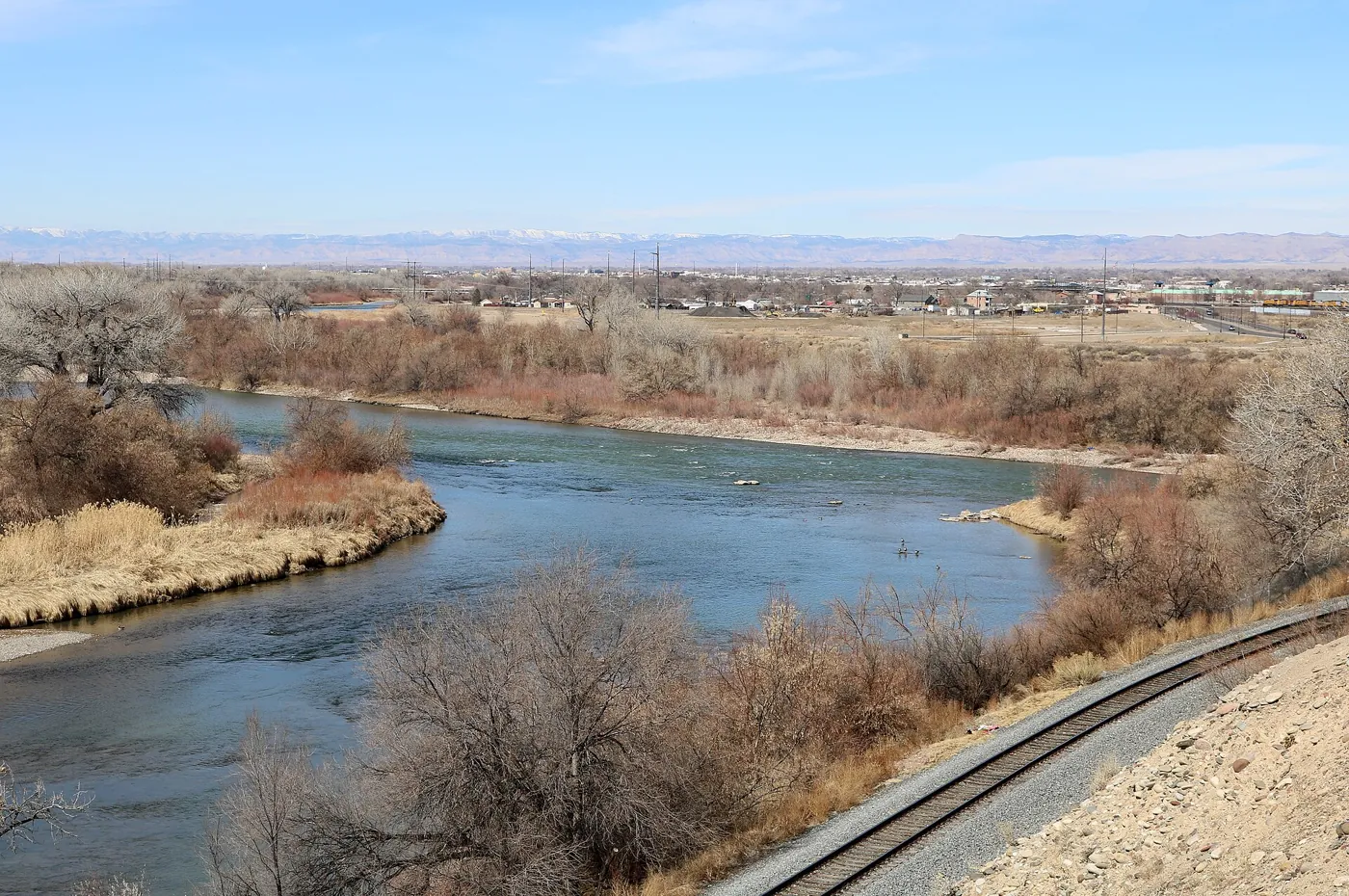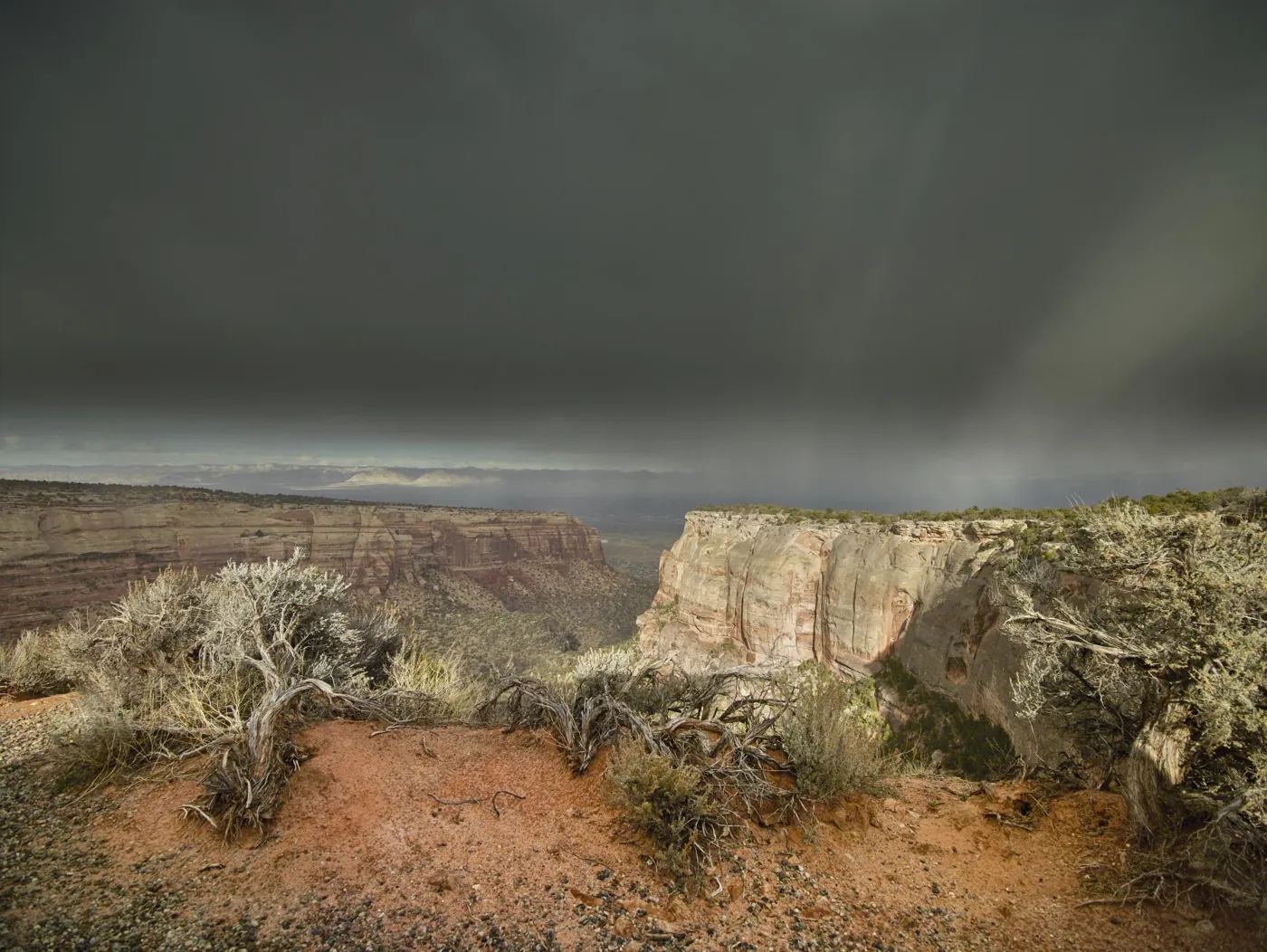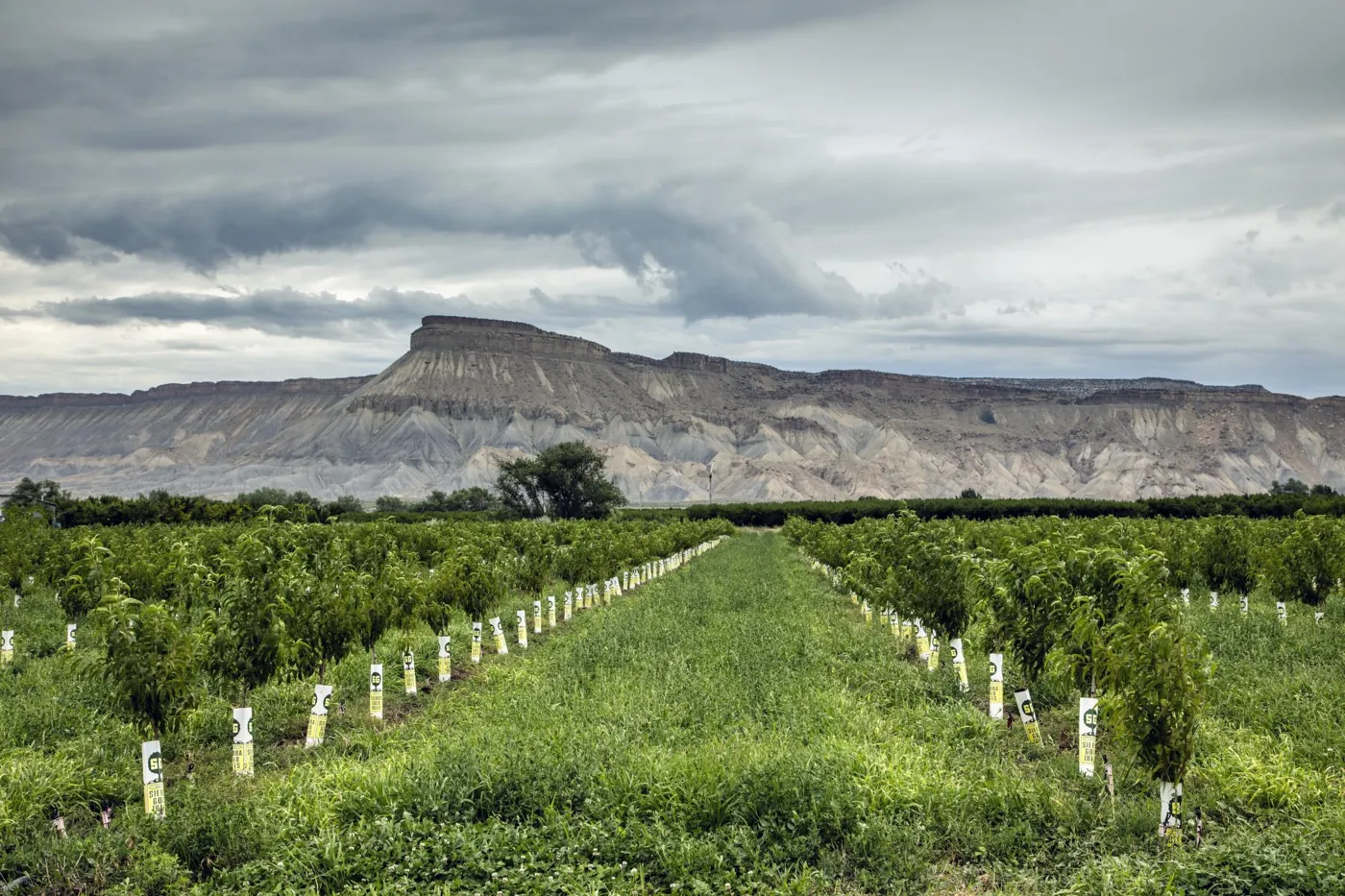
Palisade’s agricultural landscape is best understood as a relationship between growing conditions, managed water, and sustained human work. A scenic orchard is also a working system, connected to irrigation infrastructure and to decisions that continue through every season.
Begin with the people, not the peach
Colorado State University Extension describes the state’s peach industry as largely a family business, with homes and orchards often closely connected. That is a useful correction to a visitor’s first impression. The trees are not arranged for a photograph; they are part of people’s work and daily lives. Mesa County is among the peach-growing areas identified by CSU. Yet the name of a region cannot explain the decisions within an individual orchard, and this feature does not claim interviews with growers. It offers a way to notice the work behind the landscape before reducing that landscape to a product or a scenic stop.
Source notes: CSU Extension: Colorado Peaches ↗
Water arrives through a system
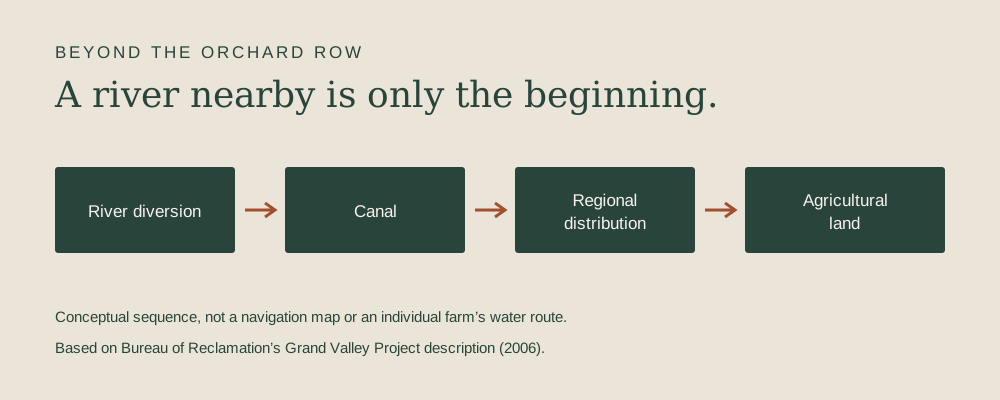
The Bureau of Reclamation’s 2006 account of the Grand Valley Project describes the diversion dam and Government Highline Canal as major facilities built between 1912 and 1917. The canal carries diverted Colorado River water into a wider irrigation network. These are features of a regional water system, not evidence that every Palisade farm receives water through precisely the same route. The important connection is that agriculture depends on more than a river passing nearby. Diversion, conveyance, maintenance, and distribution turn a geographical resource into a working supply. The orchard and the canal belong in the same picture, even when only one of them appears in the visitor’s photograph.
Source notes: Bureau of Reclamation: Grand Valley fish-passage environmental assessment ↗
A warm afternoon does not tell the whole season
Fruit-growing conditions are more complicated than a count of sunny days. CSU’s tree-fruit guidance explains why spring frost and the movement of cold air matter when selecting a growing site. It also describes the importance of training and pruning trees. Those observations help explain why an orchard’s location and form represent choices rather than scenery alone. The horticultural guidance is general; it should not be mistaken for an assessment of a specific Palisade property or advice to a commercial grower. For a reader, its value is a clearer understanding of how much lies between planting a tree and harvesting fruit.
Source notes: CSU Extension: Growing Tree Fruit in Colorado Gardens ↗
The river has another set of needs
The same Reclamation source addresses endangered-fish passage at the diversion dam and a fish screen in the canal. The document is an environmental assessment from 2006, not a statement of present project performance. Its subject nevertheless makes an important connection visible: irrigation infrastructure sits within a river ecosystem as well as an agricultural economy. Describing water only as an input to production leaves out part of the story. A complete regional account needs room for ecological questions, public decisions, and the people responsible for maintaining the system. This introduction does not decide water-rights disputes or make claims about current river conditions.
Source notes: Bureau of Reclamation: Grand Valley fish-passage environmental assessment ↗
Visit a working place on its own terms
Palisade’s tourism resources provide a starting point for learning about orchards, farms, wineries, and arts experiences. Individual destinations determine their own visitor offerings, access, and hours. Pick-your-own fruit, a farm tour, or a tasting should be confirmed directly rather than assumed from a regional description. Choose a few stops and give them time. Stay within the areas visitors are invited to use, and ask before entering working rows or photographing staff. Respect is less an extra rule attached to the visit than a recognition of what the landscape actually is: someone’s ongoing work.
Source notes: Palisade tourism: things to do ↗
Carry the connection home
An orchard can be appreciated for its beauty while also being understood as a relationship between land, water, research, and labor. That wider view does not make the pleasure of a visit less immediate. It gives the experience a context that lasts beyond the season. Our coverage will grow through further research and, when arranged, properly attributed conversations with people who work here. No business mentioned through a source link is presented as a Boxcar partner, and this article contains no paid recommendation.
A useful question
Does a regional orchard guide guarantee a harvest or visitor activity?
No. Availability, visitor access, and activities are set by each destination and may vary. Confirm the experience directly before building a visit around it.
Sources & further reading
Desk-research source notes assembled 2026-10-17. Owner publication approval does not imply independent specialist review. Consult the source directly for current access, hours, fees, and conditions.
- CSU Extension: Colorado Peaches ↗
- Bureau of Reclamation: Grand Valley fish-passage environmental assessment ↗
- CSU Extension: Growing Tree Fruit in Colorado Gardens ↗
- Palisade tourism: things to do ↗
Written as a desk-researched guide, without a claim of firsthand reporting. Our editorial standards.