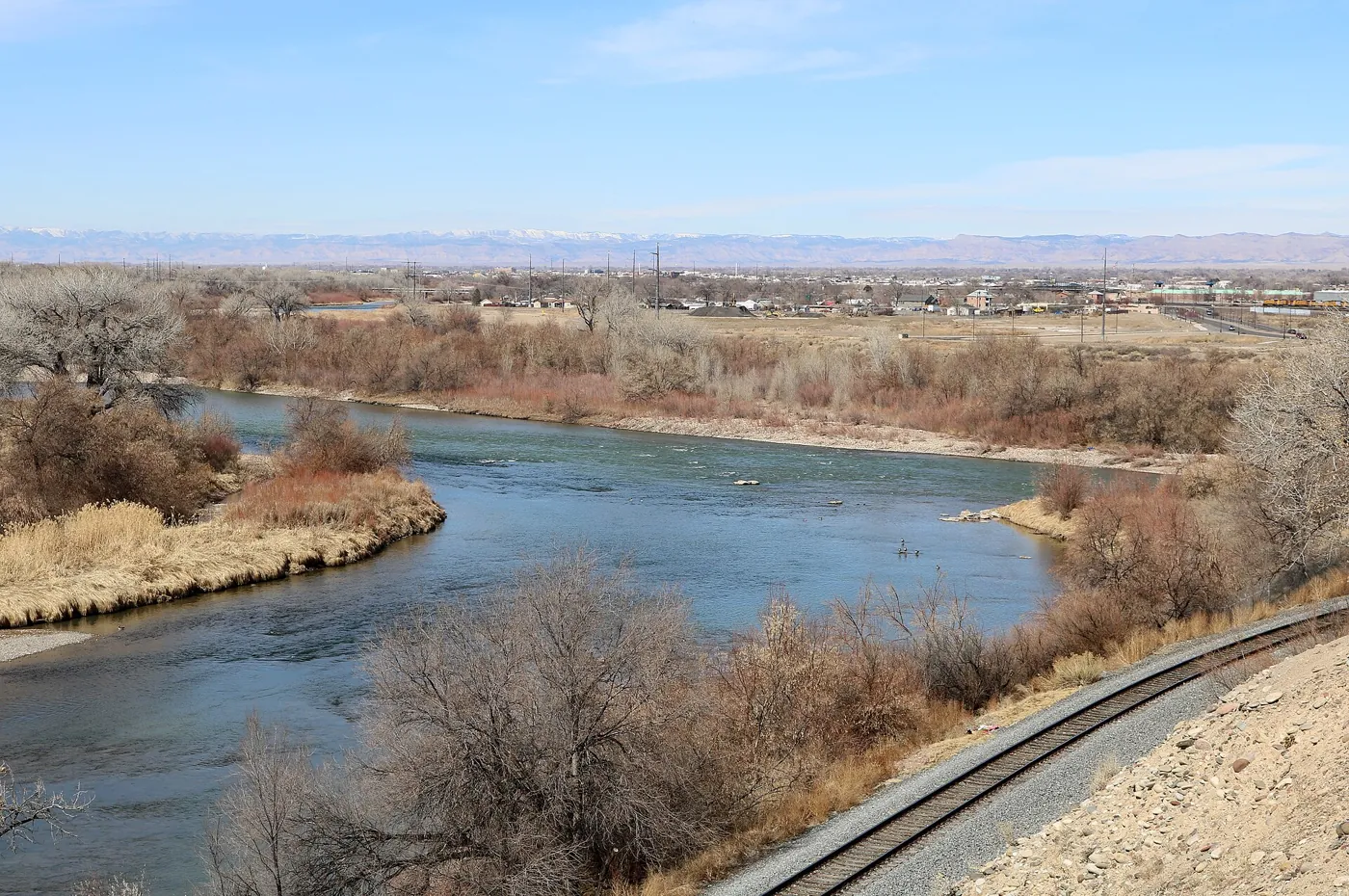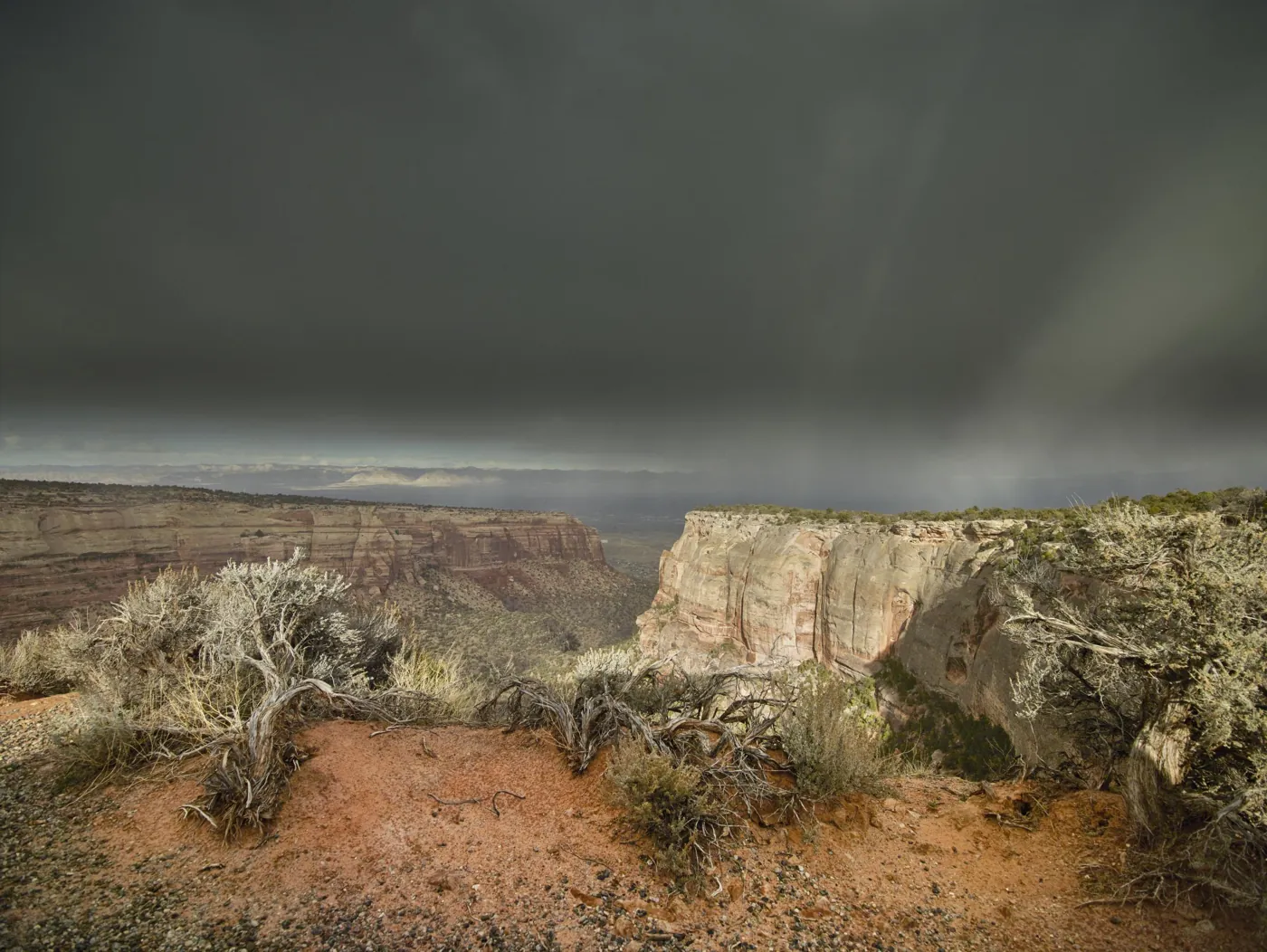
Colorado National Monument’s geology and Grand Junction’s public art offer two distinct invitations to look closely. The rocks record physical processes and gaps in preserved history; artworks are intentional human creations with artists and contexts of their own. A day connecting them does not need to pretend they tell the same story. Begin with a few observations, follow reliable interpretation, and give both landscapes and artworks room to surprise you.
Give the day a question, not a theory
A canyon overlook and an art walk can belong in the same day without a sweeping claim that nature and art mean the same thing. Their value together may be a habit of attention. At each stop, ask what is directly visible, what interpretation helps explain it, and what remains uncertain. Those questions work at different scales, from a rock face to the material or placement of a sculpture.
Keep the plan modest enough to make that attention possible. Choose a manageable outdoor stop and a small selection of artworks rather than trying to cover an entire park and a whole collection. The aim is not to prove a connection in advance. It is to discover which details stay with you when you stop treating every place as a backdrop.
At the Monument, separate rock from landscape
The National Park Service’s geological interpretation describes a landscape shaped through different processes and times. The material in a rock layer and the form of a present canyon are not interchangeable records. Start with simple observations: a ledge, a change in texture, a layer that seems to hold differently from the rock below it. Then read the interpretation that belongs to the place rather than assigning an explanation from appearance alone.
Our longer Monument feature follows this distinction between the origin of rock and the later shaping of the view. Bring one question from that reading to an overlook. You might notice more by concentrating on a single relationship than by trying to attach a formation name to everything in sight. A good question makes a view more interesting without making you an instant geologist.
Source notes: NPS: the geological story of Colorado National Monument ↗
Missing time is part of what the rocks record
NPS describes the Monument’s dark basement rocks as approximately 1.4 to 1.7 billion years old and explains a major gap in the preserved record beneath younger sedimentary rocks. The useful idea is not simply that a place is very old. It is that the visible sequence is incomplete. A gap in what remains is different from a claim that nothing happened during the intervening time.
That distinction rewards patient reading. It asks you to notice how an explanation is supported and where the evidence comes from. Do not identify a rock’s age from color alone or assume that every cliff preserves the same sequence. Follow the agency’s interpretation and the context of the particular view. The uncertainty left after a careful look is often more informative than a confident guess.
Source notes: NPS: Precambrian basement rocks ↗
Downtown, begin again with the work in front of you
Grand Junction provides a city art collection resource and an interactive map linked as the City Owned Art View. These are useful ways to choose a few works to investigate, rather than assuming that everything described as local public art belongs to one program or one owner. Check the current map and any available interpretation before building the day around a particular object.
At a work, begin with what it actually offers: material, scale, form, placement, and the artist’s credited contribution. Read a label before inventing a backstory. An object may change the way you notice a street or a space without requiring you to know its meaning immediately. Leave room for a companion to see something different. The conversation can become part of the encounter rather than a competition for the right response.
Source notes: City of Grand Junction: city art collection ↗ · City of Grand Junction: interactive art map ↗
Distinguish a city collection from an exhibition program
The Creative District’s Art on the Corner account traces that outdoor sculpture program to 1984 and describes both changing exhibitions and a permanent collection. That gives a useful historical starting point, but it should not be stretched into a claim about the current location, ownership, or availability of every work in downtown Grand Junction. Follow the source that corresponds to the program or object you want to understand.
This is also a reason to be careful with familiar promotional descriptions. A large collection does not need an unsupported national ranking to be worth your attention. Its local context, the artists involved, and the choices made about public space are already substantial subjects. Read the attribution and interpretation that are actually available, and keep a note of a question you would like to investigate further.
Source notes: Grand Junction Creative District: Art on the Corner ↗
Connect the practice of looking, not the histories themselves
Rocks are not artworks waiting for someone to assign an artist, and a sculpture is not evidence for a geological process. Respecting those differences makes the pairing stronger. What travels between the two parts of the day is your method: observe, read, ask, and return to what is in front of you. An explanation should help you notice, not replace the encounter.
A useful shared exercise is to let each person choose one detail at each stop. Describe it without immediately explaining it. Then compare what a sign, label, or source adds. This makes room for curiosity without pretending a personal response is a new historical discovery. It also slows a visit in a way that can work for people with different levels of specialist knowledge.
Build a day with room between the stops
Check park conditions and access for the outdoor portion, and verify the urban locations you plan to visit. Consider distance, surfaces, weather, rest, and the needs of the people coming with you. A linked map is a starting point for those decisions, not a guarantee that every location is currently accessible or that every artwork remains on display exactly where an older account places it.
Finish with a question rather than a completed list. Which detail changed when you looked again? Which source gave you a more careful explanation? Our Grand Junction history feature offers another way into the city, while the Monument feature deepens the geological side. Both can extend the day’s attention beyond the outing itself. No business or institution cited here is presented as a contracted Boxcar partner.
Source notes: NPS: the geological story of Colorado National Monument ↗ · City of Grand Junction: city art collection ↗ · City of Grand Junction: interactive art map ↗
Sources & further reading
Desk-research source notes assembled 2026-10-24. Owner publication approval does not imply independent specialist review. Consult the source directly for current access, hours, fees, and conditions.
- NPS: the geological story of Colorado National Monument ↗
- NPS: Precambrian basement rocks ↗
- City of Grand Junction: city art collection ↗
- City of Grand Junction: interactive art map ↗
- Grand Junction Creative District: Art on the Corner ↗
Written as a desk-researched guide, without a claim of firsthand reporting. Our editorial standards.